My Journey at Embedded World 2026: Three Days in the Heart of Embedded Innovation
March 2026, Nuremberg, Germany
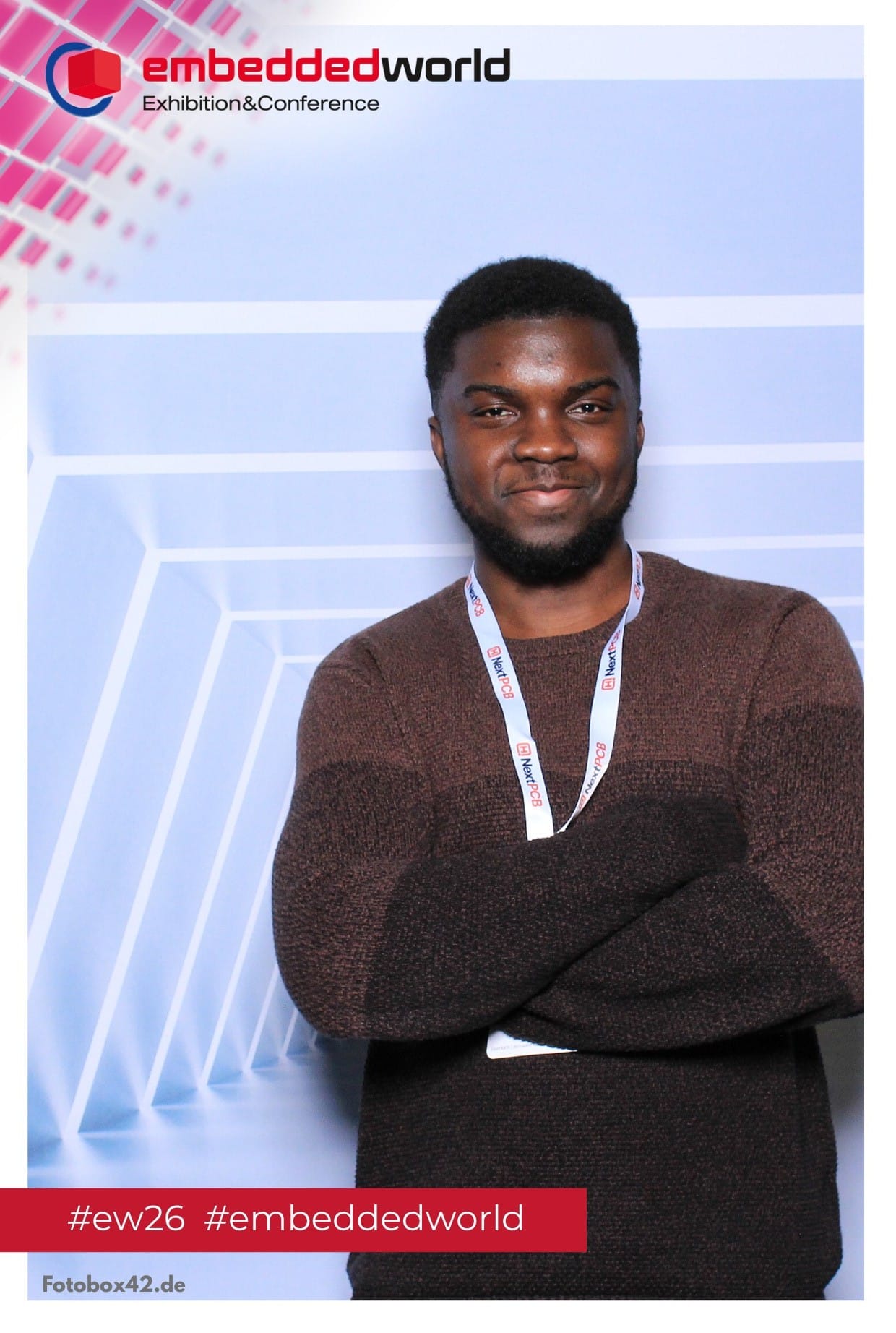
If there's one event every embedded engineer should experience at least once, it's Embedded World. This year, I made the trip to Nuremberg for Embedded World 2026 (March 10–12), and I came back with a head full of ideas, a bag full of dev boards, and a clear sense of where our industry is heading.
Here's my recap of three packed days on the exhibition floor, from a hands-on QNX workshop to walking through five halls buzzing with innovation.
The One Theme That Was Everywhere: Edge AI
Let me get this out of the way upfront: Edge AI dominated everything.
It wasn't a side topic or a niche area tucked into one corner of the exhibition. It was the central narrative across nearly every hall, every booth, every conversation. Whether I was looking at new silicon from STMicroelectronics, NXP, Infineon, or Renesas, checking out the latest from Arduino, Raspberry Pi, or Qualcomm, or discovering what companies like Foundries.io and Edge Impulse were building, the message was the same: intelligence is moving to the edge, and it's moving fast.
What struck me most was how far beyond the demo stage things have progressed. This wasn't about flashy proof of concepts anymore. Companies were showing production-ready silicon with dedicated AI accelerators, neural processing units integrated into mainstream MCU families, and toolchains designed to get ML models running on microcontrollers with minimal friction.
Arduino made a big splash with the VENTUNO Q, a board combining a Qualcomm Dragonwing IQ8 with an STM32H5 MCU. It's a perfect example of how edge AI is becoming accessible to a much wider developer audience. Qualcomm's presence was felt across multiple booths, reinforcing how seriously they're investing in the embedded AI space following their acquisitions of Edge Impulse and Foundries.io.
For someone working in embedded systems, this shift feels both exciting and urgent. The skills gap between traditional firmware development and edge AI deployment is something our industry will need to close quickly. It's no longer optional. It's becoming table stakes.
Walking the Floor: Five Halls of Innovation
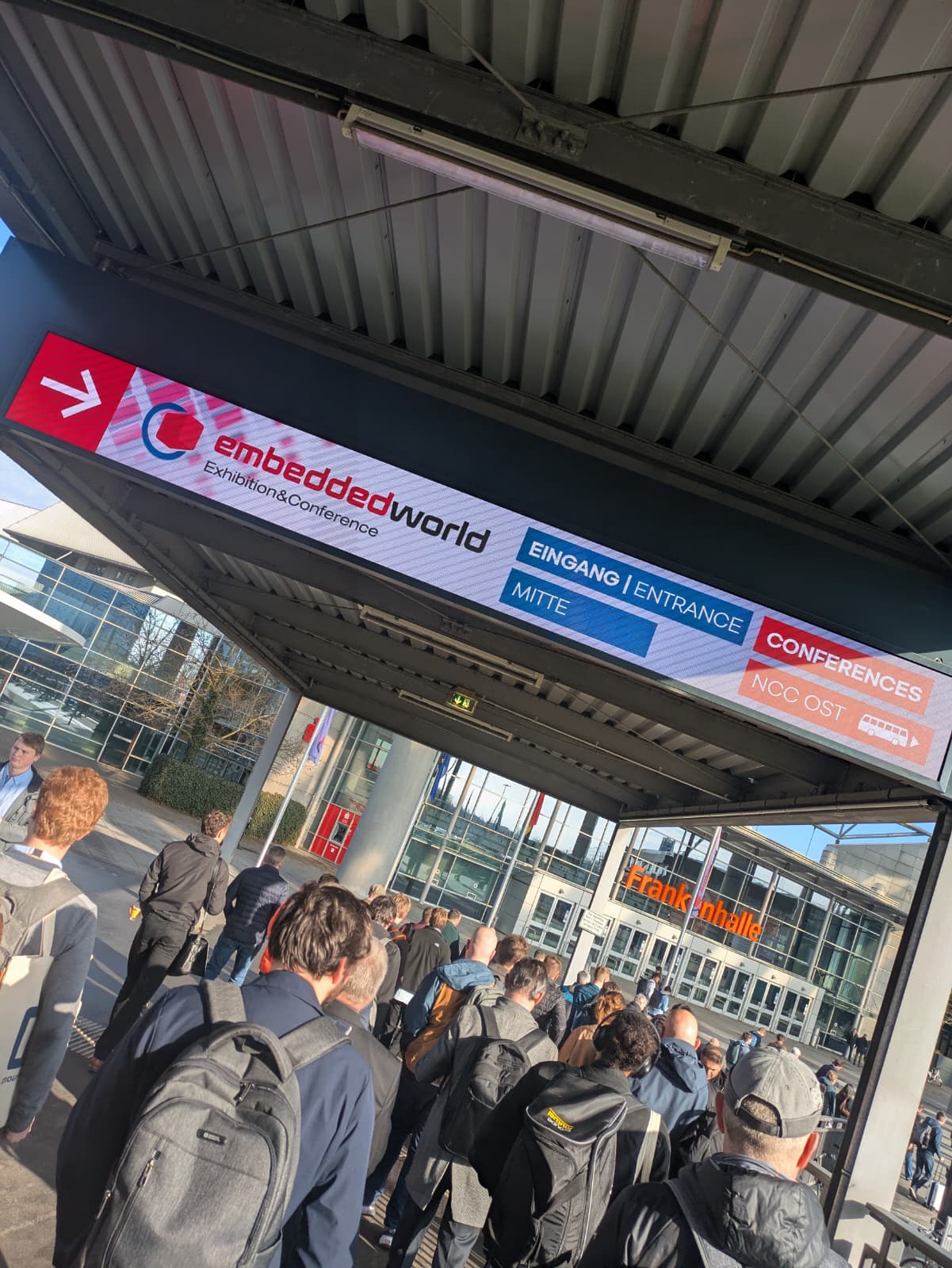
With over 1,100 exhibitors spread across five halls, Embedded World is an overwhelming experience in the best possible way. The sheer density of innovation per square meter is hard to describe. You turn a corner and there's a new RTOS demo, a new development board, a new sensor platform, a new toolchain.
The big names were all there: STMicroelectronics, NXP, Infineon, Renesas, Texas Instruments, Nordic Semiconductor, Microchip, Silicon Labs, Espressif, and many more. But what makes Embedded World special is that it's not just about the silicon giants. The halls were packed with RTOS vendors, toolchain providers, embedded Linux specialists, test and measurement companies, connector manufacturers, and startups pushing boundaries in every corner of the embedded ecosystem.
Arduino and Raspberry Pi both had strong presences, a reminder that the maker to professional pipeline is alive and well, with both platforms increasingly showing up in industrial and commercial applications. Foundries.io was showcasing their embedded Linux platform alongside Edge Impulse's AI development tools, and seeing how these pieces fit together for scalable edge AI deployment was genuinely impressive.
What I noticed across the board was a convergence around a few key themes beyond edge AI. Safety and security kept coming up everywhere, not as an afterthought, but as a core design requirement baked into platforms from the ground up. The energy around open source was palpable too, with Zephyr RTOS and RISC-V generating real excitement and adoption momentum. And embedded Linux continues to gain ground in applications that would have been bare metal territory just a few years ago.
The diversity of applications on display was staggering: automotive systems, industrial automation, medical devices, robotics, smart agriculture, energy management, and aerospace. It's a powerful reminder that embedded systems truly are everywhere, and the engineers who build them are shaping the world in ways most people never see.
The Highlight: QNX 8.0.2 Hands-On Workshop
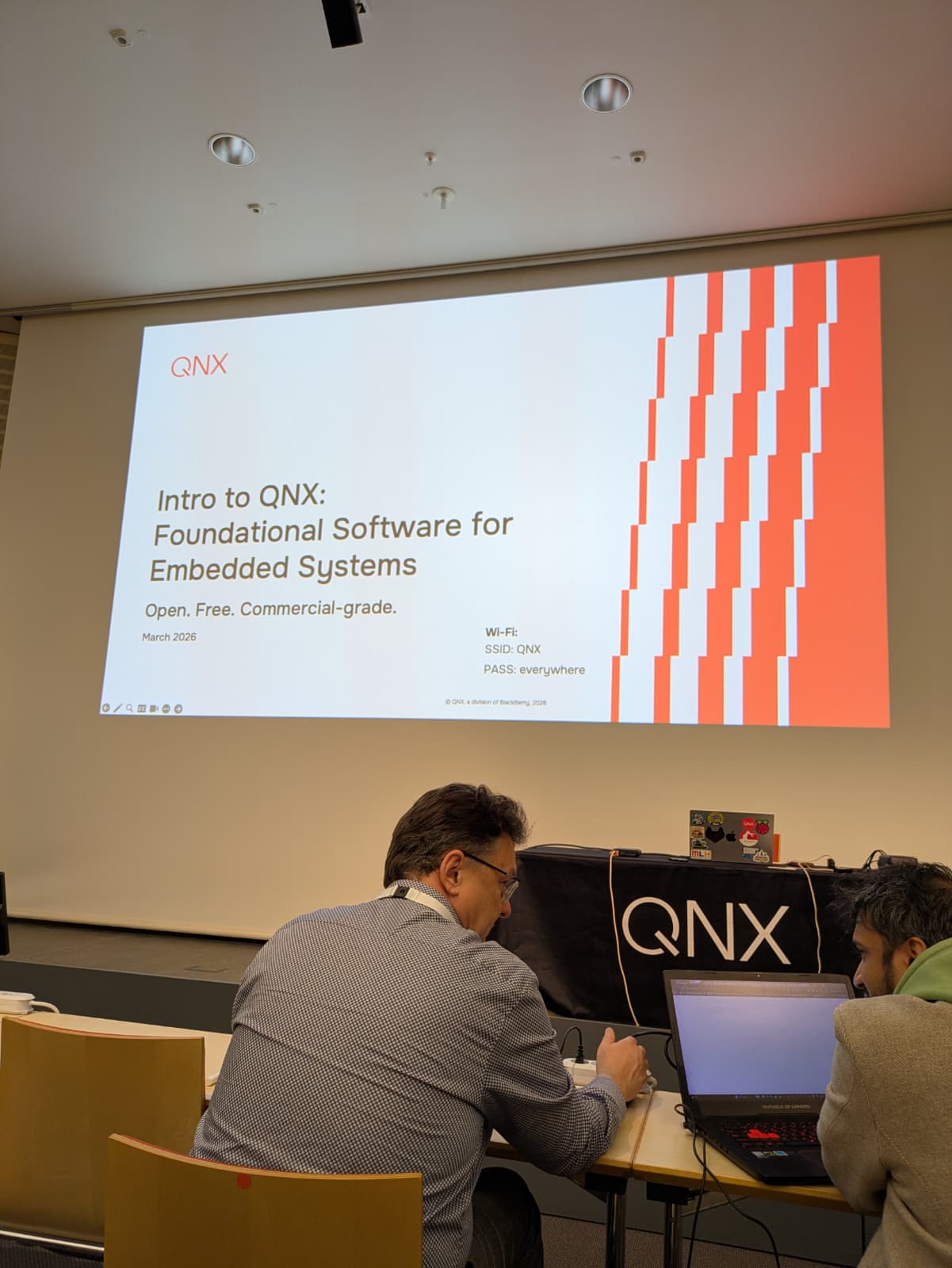
If I had to pick a single highlight from the entire event, it would be the QNX hands-on workshop on Day 1.
Organized by BlackBerry QNX and made possible by Patrick Hopper, this three hour session was designed for embedded engineers with a working knowledge of C who wanted a proper introduction to the QNX ecosystem. And it delivered.
The workshop covered the essentials: QNX's microkernel based RTOS architecture, its approach to safety and security in embedded systems, the hypervisor and middleware layers, and the development tools that tie it all together. But the real value was in the hands-on portion. We set up the QNX development environment, wrote our first QNX application, and deployed it to a Raspberry Pi target, all guided by expert QNX developers who were there to answer questions and troubleshoot in real time.
What I appreciated most was how QNX's architecture differs from the RTOS environments I typically work with (FreeRTOS, Zephyr). The microkernel design, where drivers, file systems, and protocol stacks all run in user space rather than kernel space, creates an inherently more robust and fault tolerant system. It's easy to see why QNX is the go-to choice for safety critical applications in automotive, medical devices, and industrial systems.
And the cherry on top? Every attendee walked out with a Raspberry Pi 5, a pre-commercial QNX development license, and a full suite of QNX development tools. Not a bad Tuesday afternoon in Nuremberg.
I'm genuinely excited to continue exploring QNX on my own. Having the hardware and license in hand removes the biggest barrier to getting started, and I plan to dig deeper into building applications on this platform.
A huge thanks to Patrick Hopper and the BlackBerry QNX team for putting this together. It was one of the most well organized and valuable workshops I've attended.
Personal Reflections & Takeaways
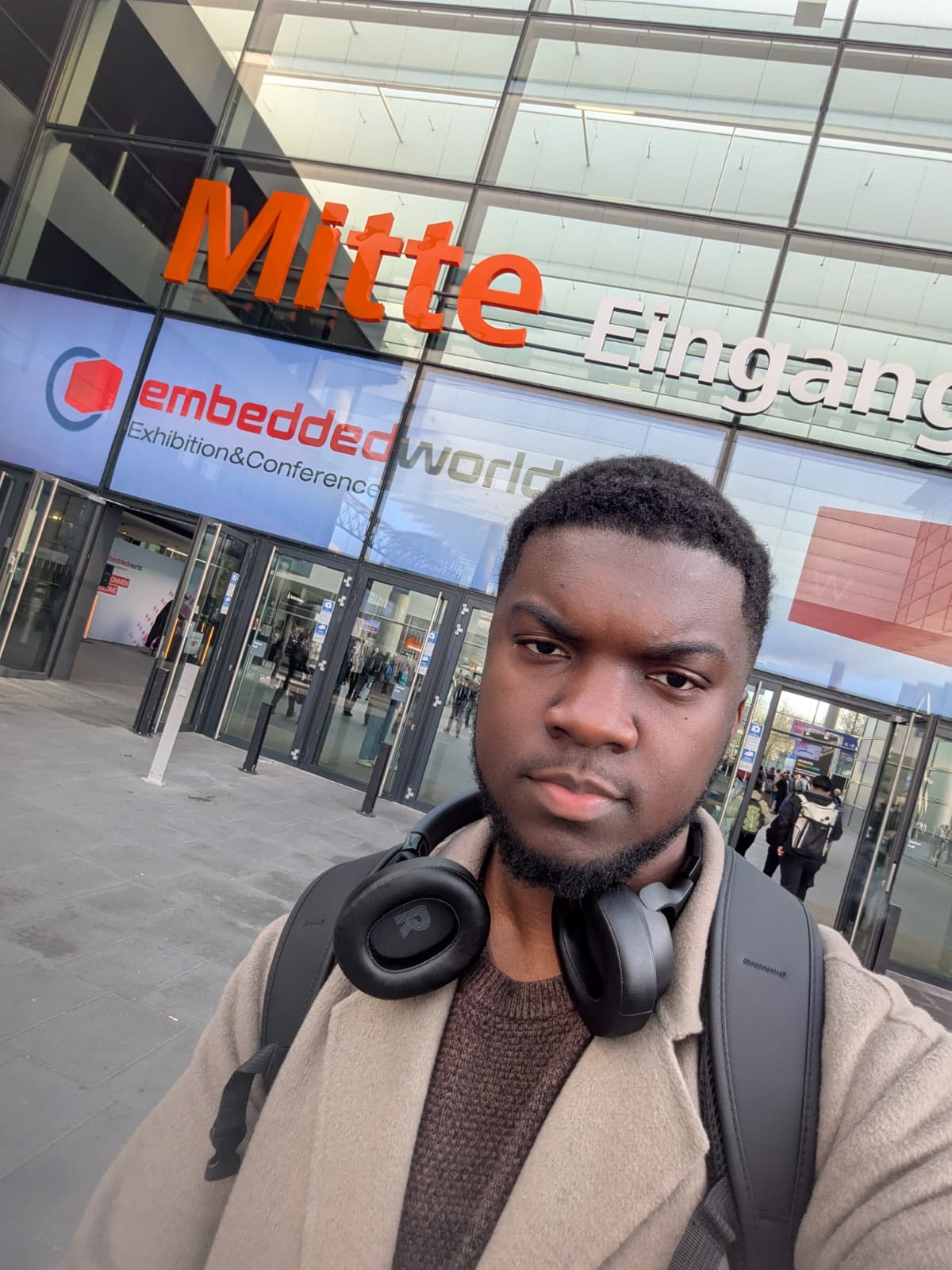
Embedded World is more than an exhibition. It's a pulse check on where our industry is going. Here are my key takeaways from 2026:
Edge AI has crossed the tipping point. The transition from experimental demos to production deployment is well underway. Every major silicon vendor now has AI accelerated products in their portfolio, and the tools are catching up. As embedded engineers, learning the basics of ML model deployment on MCUs is becoming an essential skill.
The ecosystem is what matters. It's no longer just about the chip. The companies winning mindshare are the ones offering complete ecosystems: silicon, development tools, cloud integration, OTA updates, and AI toolchains all working together. The Qualcomm, Arduino, Edge Impulse, and Foundries.io stack is a great example of this thinking.
Safety and security are first class concerns. Whether it was QNX's microkernel architecture or the broader conversations around functional safety standards, it's clear that security can no longer be bolted on as an afterthought. It needs to be designed in from day one.
Open source is winning. The energy around projects like Zephyr RTOS, RISC-V, and Yocto/OpenEmbedded was everywhere. The embedded world is embracing open source tools and frameworks at an accelerating pace, and that's good for everyone.
The people make the event. Beyond the technology, the most valuable part of Embedded World is the conversations. Talking face to face with engineers, founders, and technical leaders from across the industry gives you perspective that no datasheet or webinar can match. The embedded community is incredibly welcoming, and events like this remind you why it's a great field to be in.
What's Next
Coming back from Nuremberg, I have a clear list of things to explore:
QNX development. With my new Raspberry Pi 5 and QNX license, I want to build something meaningful on this platform and document the journey on TA Embedded.
Edge AI on STM32. Deepening my understanding of deploying ML models on the MCU families I already know well.
Embedded Linux. Continuing to build my skills in Yocto and kernel level development, areas where I'm actively investing time.
If you attended Embedded World 2026, I'd love to hear what stood out to you. And if you didn't make it this year, put it on your calendar for next year. It's worth every minute.
*This article was published on ta-embedded.com.Follow our LinkedIn page [TA-embedded](https://www.linkedin.com/company/ta-embedded/ .